PANGU v8.02 was released on 2025-Dec-03 adding support for event-based camera modelling, depth-of-field effects, improved OBJ importing, integration with machine learning systems, PNG image support for surface model albedo maps, the ability to import parameters directly from PDS3 labels, and the NAIF/SPICE support for offline shadowmap generation.
Event-based cameras operate in a substantially different way to traditional image-based sensors, only producing outputs when the observed scene changes. Each pixel emits an event whenever the light level is a constant factor larger or smaller than the level at the previous event. Each event is tagged with the time, the x-y coordinates of the pixel, and the polarity (brighter/darker). An event-based image and the visual scene is shown side-by-side below.
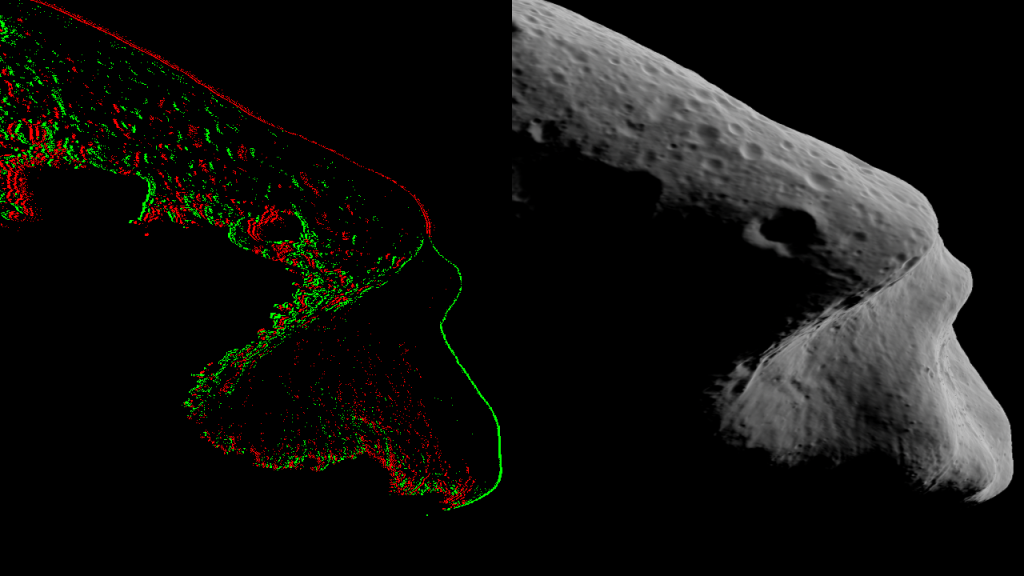
An event processing tool is provided to decompose event streams into separate image frames, heat maps an histograms for visualiation.
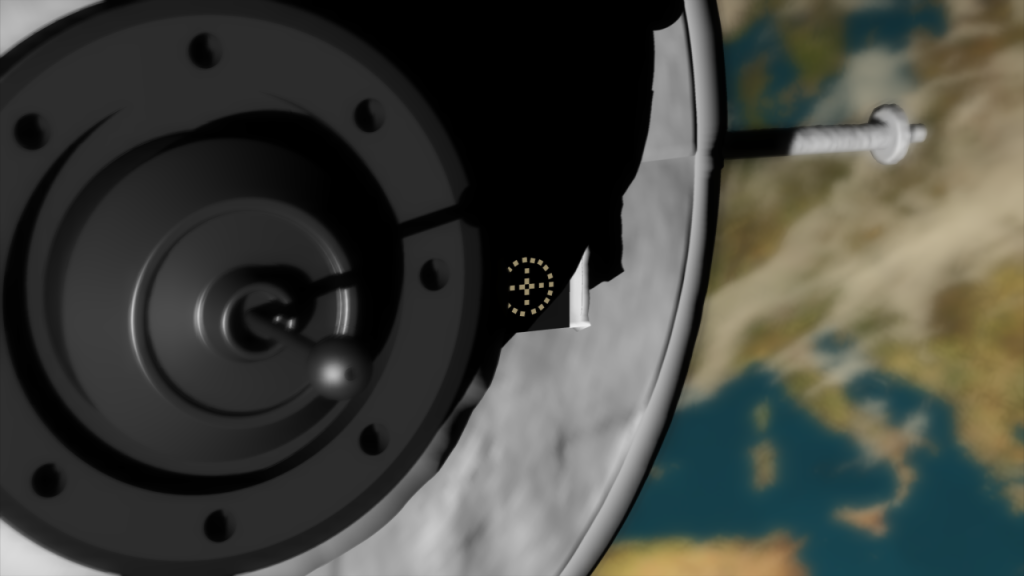
Depth-of-field is an effect due to the finite distance over which objects can be brought to a focus. Depending on the focal length, aperture and focal distance, objects too close or too far away will appear blurred in captured images. The effect can be seen in a PANGU simulation of a rendezvous with the ATV spacecraft.
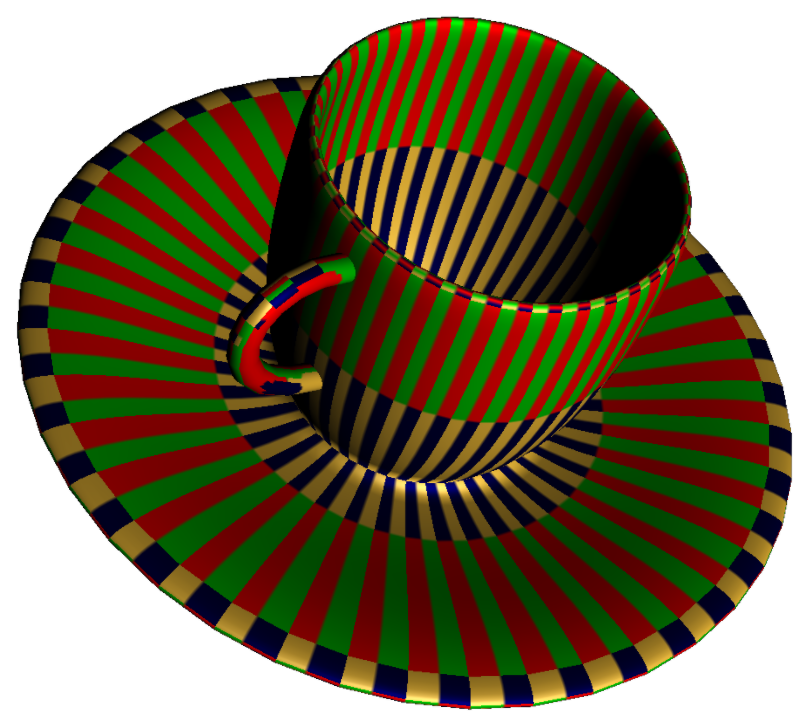
The Wavefront|OBJ CAD model importing tool obj2pan is updated to support explicit normals, texture coordinates and materials. This allows models with colour or texture to be imported into a PANGU simulation, such as the Newell teacup model shown below.
To demonstrate how PANGU can be used to both support and utilise machine learning applications, a Generative Adversarial Network (GAN) was trained using real and synthetic lunar data to infer a lunar image style transfer for PANGU-generated images. The GAN is used within a demonstration PANGU client program which is provided as source code along with the CycleGAN.
The PANGU v8.02 installers for Windows and Linux are available from the Downloads page.